Whole-House Surge Protection in Tampa Bay
Surge protection at the panel and at the equipment that matters, in the part of the country with the densest lightning: what a whole-house surge protector does, what it does not, and when the code requires one. Call now.
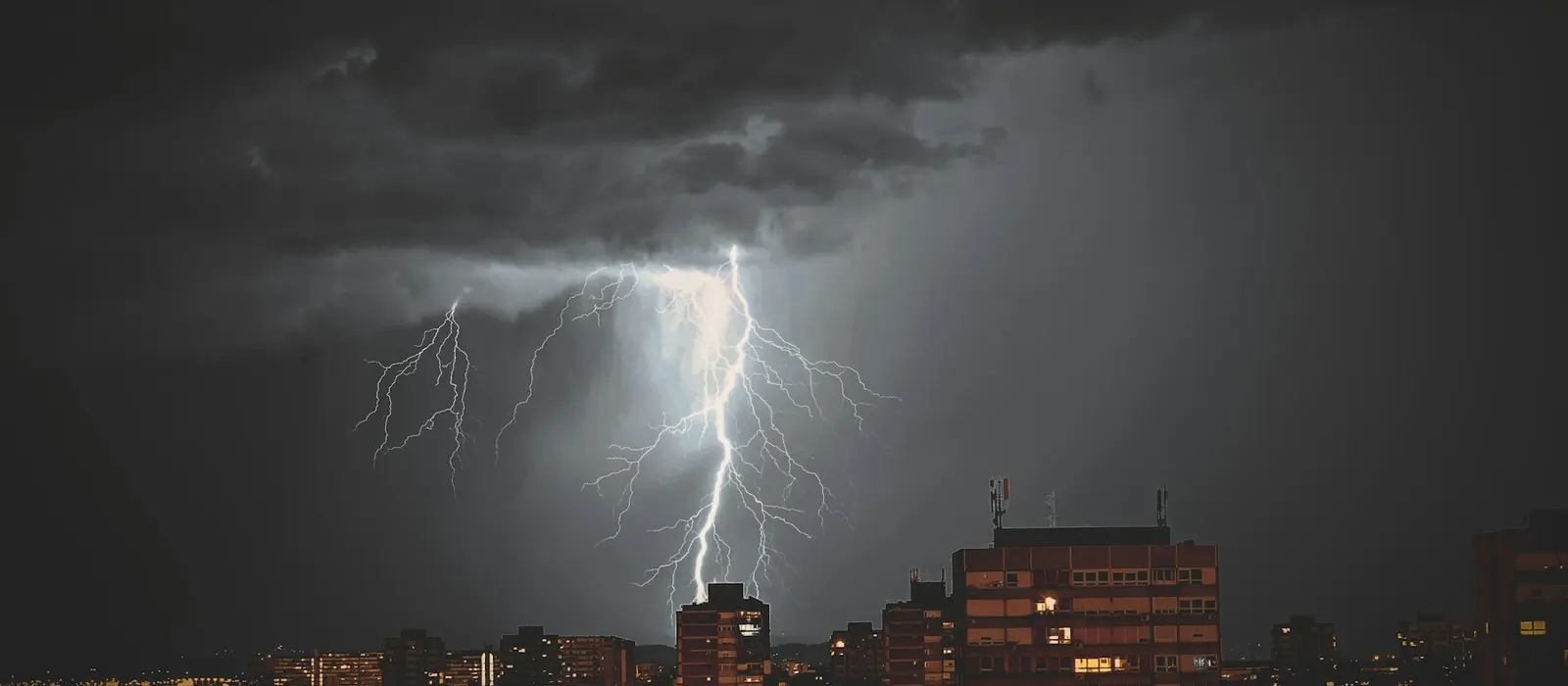
Florida leads the country in lightning density, and summer afternoons around the bay prove it. Surges also come from the grid itself: switching, tree contact, and the moment power comes back after an outage. Modern houses are full of electronics that do not tolerate them: AC and pool-pump control boards, variable-speed motors, appliances, chargers and TVs.
Need an electrician?Call 000-000-0000
At the panel
A whole-house surge-protective device (SPD) mounts at the service, in or beside the panel, and limits surges coming in on the utility lines before they reach the branch circuits. Since the 2020 electrical code, which Florida's 8th Edition building code applies, one is required whenever a dwelling's service equipment is replaced. Adding one to an existing panel is also common, usually on a dedicated breaker.
At the equipment
A panel device takes most of the energy; a plug-in protector at the TV, the computer or the charger handles what is left and what comes in on cable, phone or network lines. Both layers are worth having in a house with expensive electronics.
What it does not do
No surge protector stops a direct strike to the house. Protection depends on good grounding and bonding, which an electrician checks when installing one, and on short, straight leads to the device. Protectors wear with each event; most have an indicator that shows when they need replacing.
A surge protector that was under flood water is replaced, along with the breakers and outlets around it, per NEMA's guidance on water-damaged equipment.
- Type 1 or Type 2 device at the service
- Grounding and bonding checked
- Point-of-use protection where it matters
- Replacement after a large surge or a flood