Generator Hookups and Transfer Switches in Tampa Bay
Connecting a portable or standby generator to a Tampa Bay house safely: inlets, transfer switches, what Tampa Electric and Duke Energy require, sizing, placement and permits. Call now.
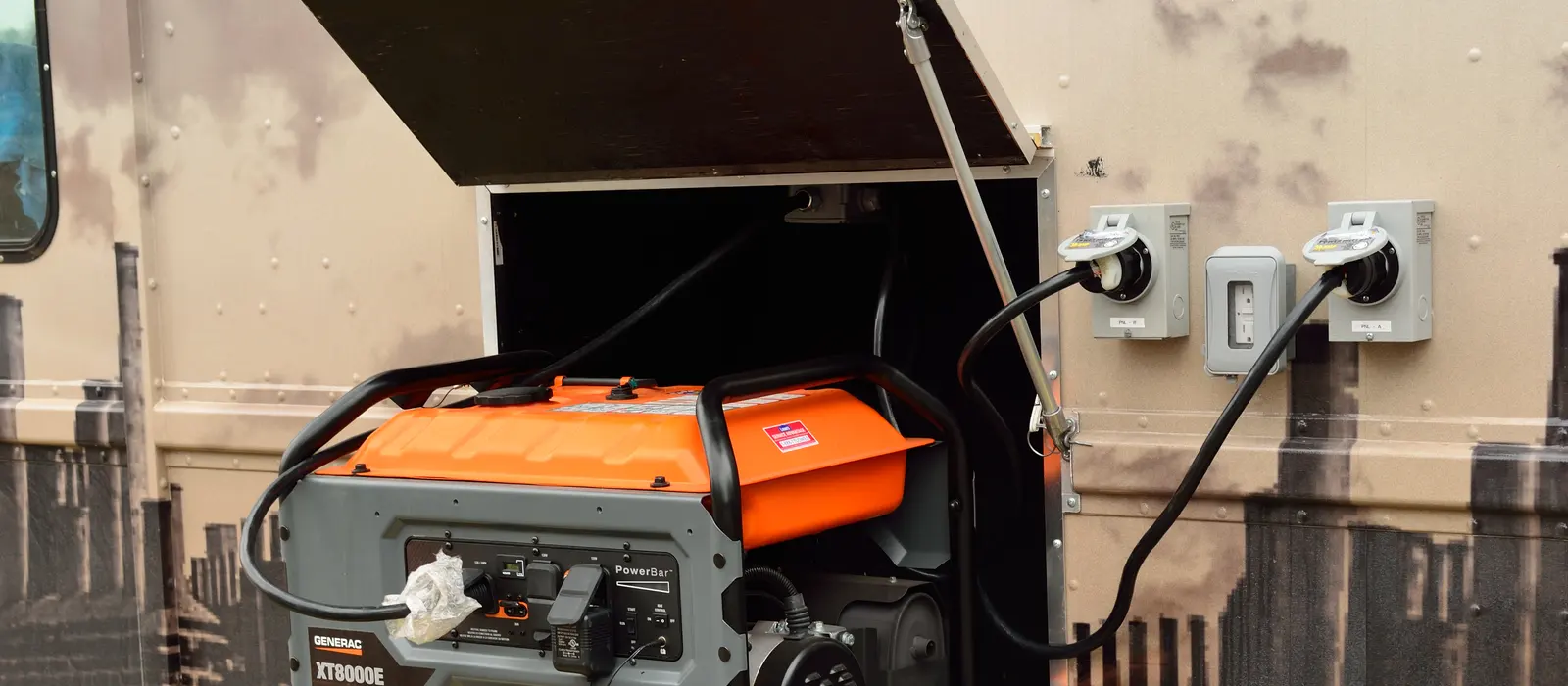
After Milton, much of the bay went days without power, and portable generators ran on extension cords through windows. A generator connected properly powers the circuits that matter, the fridge, the lights, the well or a window unit, without anything plugged into a wall outlet and without feeding the utility's lines.
Need an electrician?Call 000-000-0000
Never through a dryer outlet
A cord with two male ends, plugged from a generator into a dryer or range outlet, sends power back out through the panel to the street. Line crews working on what they believe is a dead line can be hurt, and the generator and the house wiring can be damaged when the grid comes back. Duke Energy says plainly that it does not recommend connecting a generator directly to a breaker panel, fuse box or meter box, and that standby generators should be installed by a licensed electrician.
What Tampa Electric and Duke require
Tampa Electric's service requirements call for an approved double-throw transfer switch, manual or automatic, after the meter, so the house is on the grid or on the generator and never both, and they say a standby generator may not be connected without Tampa Electric's prior approval. They also ask that a generator's exhaust stay at least 15 feet from Tampa Electric equipment, meters included.
For a portable generator, the usual setup is an inlet box outside and a transfer switch, or a listed interlock on the main panel that the building department accepts as the transfer means. The electrician confirms what the utility and the city accept before choosing.
Standby units
A standby generator runs on natural gas or propane, starts on its own, and switches the house over with an automatic transfer switch. It needs an electrical permit and a gas permit, a load calculation for its size, and a spot that meets the manufacturer's and the code's clearances from windows, doors and the property line. In a flood zone it sits at or above the required elevation.
- Inlet box and transfer switch or listed interlock for a portable
- Automatic transfer switch for a standby unit
- Load calculation: what runs, what waits
- Permit, inspection and utility approval where required
- Placement away from openings and the meter
Running it
Run a portable generator outside, away from doors, windows and vents, never in a garage, even with the door open. Start it before switching the transfer to generator, and switch back before shutting it down when the grid returns.